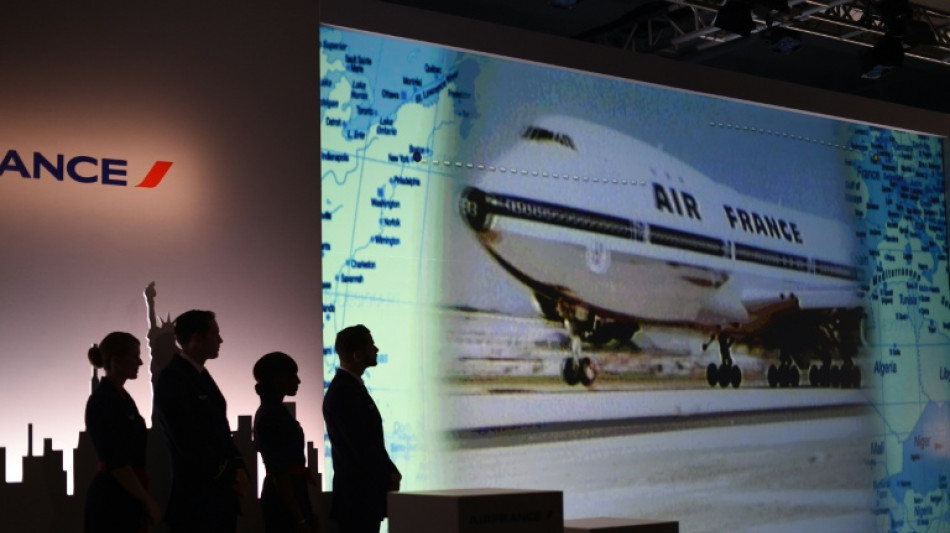
French flight attendant wins landmark breast cancer ruling / Photo: TIMOTHY A. CLARY - AFP

A flight attendant in France has succeeded in having her breast cancer recognised as an occupational disease, a first for the country's aviation industry, her lawyer and a trade union said.
The ruling -- which recognised that Sophie Lainault, a former flight attendant for Air France, had frequently worked at night and been exposed to passive smoking -- could pave the way for similar claims, the lawyer and the CFDT union said.
Lainault told AFP Tuesday she hoped her legal victory could help other women.
"It is truly my dearest wish that this opens the way for other women who might not have dared until now," the 59-year-old, who lives in Anglet in southwestern France, said.
Now in remission, Lainault said she worked for Air France, the country's flagship carrier, between 1989 and 2019 as a flight attendant and later as a purser on long-haul flights, accumulating more than 12,600 flight hours, including over 6,500 at night.
The ruling, which AFP reviewed, came from a court in the southwestern city of Bayonne in early July and recognised the occupational origin of Lainault's cancer.
The court highlighted the role of night work, exposure to ionising radiation and passive smoking. Smoking was permitted on Air France flights until 2000.
The court also noted the absence of any genetic or lifestyle-related factors that could otherwise explain the cancer.
Two regional committees responsible for recognising occupational diseases had previously concluded that no link had been established.
Breast cancer is not included in France's official list of occupational diseases, meaning that obtaining recognition can be a lengthy and difficult ordeal for patients.
The ruling will allow Lainault to take early retirement, she said. Lainault said that she had fought for two and a half years for the recognition, supported by CFDT activists.
Lainault's lawyer, Elisabeth Leroux, said the court decision sets a legal precedent.
The ruling is final and no appeal was lodged, she added.
Some studies have suggested that women who regularly work night shifts may face a higher risk of developing cancer.
Air France said it "was not a party to the proceedings and has not been informed of the court's reasoning."
The airline said that "the health and safety of employees at work is an absolute priority."
In 2023, a French nurse who had worked night shifts for 28 years and been exposed to radiation succeeded in having her breast cancer recognised as an occupational disease.
With nearly 13,000 deaths each year, breast cancer is the deadliest cancer among women in France.
ref-bj-hh-as/st
I.Mele--HStB