Kauaʻi Writers Garden Challenges Honolulu-Centric Literary Scene



Marking its first anniversary in Līhuʻe, the Kauaʻi Writers Garden has established itself as a central pillar of Hawaiʻi’s expanding literary ecosystem. Founded by musician Thomas Iannucci and Councilmember Addison Bulosan, the free speaker series provides an accessible platform for local writers, countering the high costs and geographic barriers that have traditionally centered cultural recognition in Honolulu or mainland hubs.
Hawaiʻi is experiencing a sustained surge in literary production, moving beyond the era of isolated landmark publications to a period of consistent output. Over the past five to six years, the state has seen a convergence of significant titles, including Mariah Rigg’s "Extinction Capital of the World," Sara Kehaulani Goo’s "Kuleana," and recent novels by acclaimed authors T Kira Madden and Kawai Strong Washburn.
This literary expansion is supported by a growing infrastructure of reading series, presses, and critical forums. Among the newest developments is the Kauaʻi Writers Garden, which celebrated its first anniversary this month in Līhuʻe. The organization has emerged as a key node in the islands' cultural landscape, hosting an array of writers, poets, and publishers such as Brandy Nālani McDougall, Lee Tonouchi, Megan Kamalei Kakimoto, Ingrid Rojas Contreras, and Scott Kikkawa.
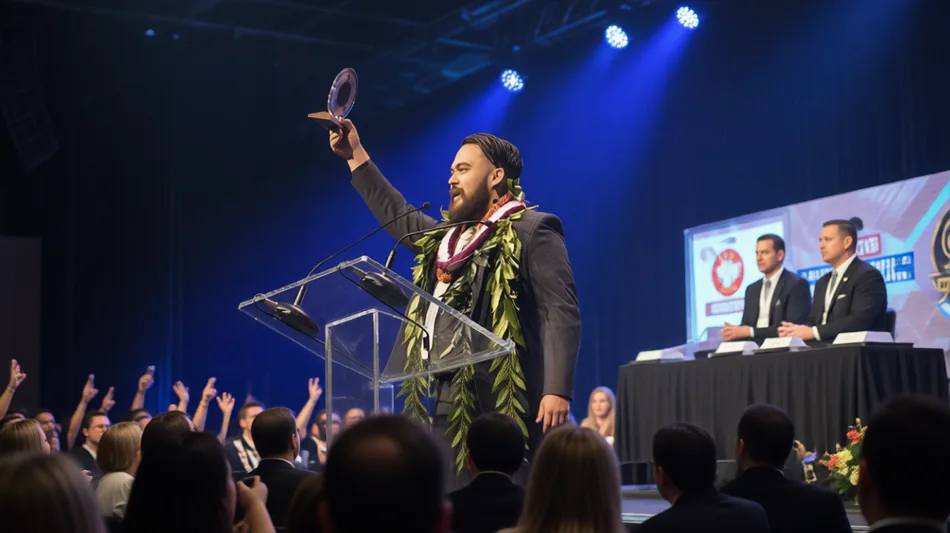
The Garden originated from a collaboration between writer and musician Thomas Iannucci and Kauaʻi County Councilmember Addison Bulosan. Iannucci, a three-time Nā Hōkū Hanohano Award winner who is shifting his focus from music to fiction, had been commuting between Kauaʻi and Oʻahu since publishing his first short story in 2023. The logistical demands of this travel—described by Iannucci as involving "plenty [of] favors" and sleeping on couches—combined with the anxiety of flying, prompted a reevaluation of how literary opportunities could be distributed.
Iannucci observed that while Hawaiʻi was producing high-quality writers, national recognition often bypassed those outside Oʻahu’s established circles. He hypothesized that creating a venue in Līhuʻe would attract audiences who might not otherwise engage with local talent. The initiative has since become a centerpiece of Kauaʻi’s literary community, operating under the Rice Street Business Association with support from donors including Hawaiian Telcom and HMSA, and maintaining partnerships with the Hawaiʻi Council for the Humanities and the National Book Foundation.
Don Wallace, author and editor of the Hawaii Review of Books, emphasized the significance of the Garden’s achievements during a difficult year for weather and public health. "What Kauaʻi has accomplished for its local writing community... is proof that it isn’t the distance from New York (or Honolulu) that matters," Wallace said. "It’s the ferocity of your commitment to your fellow writers and readers."
The Garden’s model stands in contrast to the Kauaʻi Writers Conference, an annual event held at a Līhuʻe resort. This year’s conference charges $895 for attendance, with an additional $895 for master classes, excluding food, lodging, and travel costs. While the conference offers scholarships and kamaʻāina discounts, some local writers have criticized it for catering primarily to visiting authors and those with significant financial resources.
Iannucci has designed the Writers Garden to operate differently: it is free, rooted in its specific location, and features contemporary writers with ties to Hawaiʻi. The organization aims to challenge the long-standing implicit message that high-level cultural experiences require leaving the neighbor islands or the state entirely.
Looking ahead, the Garden has already scheduled speakers for 2027, including Alicia Upano, author of "Everything to the Sea," who is set to appear in January. Iannucci, who writes in pidgin and has a forthcoming book, plans to launch collaborations with Bamboo Ridge Press and Bess Press. Councilmember Bulosan described the community’s reception as welcoming, noting that visiting guests often find a sense of belonging akin to reconnecting with family.
V.Pua--HStB