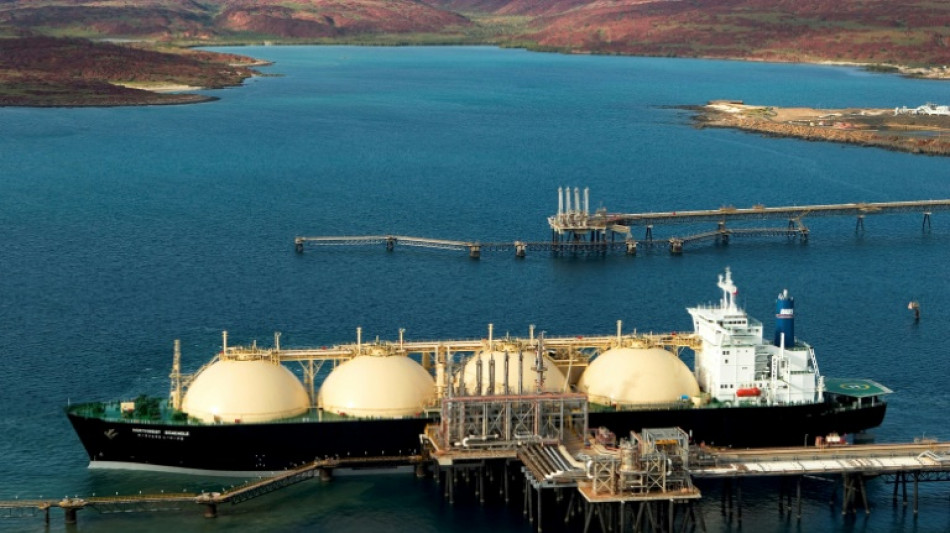
Australia to force gas giants to reserve fuel for domestic use / Photo: Handout - WOODSIDE ENERGY LTD/AFP



Australia will look to stave off energy shortages by forcing major gas companies to reserve 20 percent of their exports for domestic use, Energy Minister Chris Bowen said Thursday.
The country is one of the world's largest exporters of liquefied natural gas (LNG), a key fuel source in hot demand as war in the Middle East upends global energy markets.
In a bid to shield the nation from "global price volatility", Australia's largest gas firms will be forced to ring fence fuel for the domestic market -- equivalent to 20 percent of their exports.
"We've been acting to shield Australians from global energy shocks by investing in reliable, sovereign renewables and keeping more of the gas we need onshore," Bowen told reporters.
Australia is a major supplier of LNG throughout Asia, where prices have soared since the United States and Israel launched strikes on Iran at the end of February.
Around 40 percent of Japan's LNG comes from Australia, according to the Asia Natural Gas and Energy Association.
Australia is Singapore's largest source of LNG, supplying more than 30 percent of its needs, according to government figures.
Bowen sought to soothe any concerns that the decision could hurt trading partners.
- 'Reliable' partner -
"We will not disturb any existing contracts.
"We have consulted closely with trading partners to ensure that it's well understood around the world that Australia will always be a reliable supplier of energy."
The government would pass laws to have the reservation scheme in place from July 2027, Bowen said.
Geographically isolated and with only two oil refineries, Australia is heavily exposed to disruptions to global fuel supplies.
With Iran halting a fifth of world fuel shipments through its effective closure of the crucial Strait of Hormuz, Australia has moved to shore-up its fuel security.
Prime Minister Anthony Albanese announced Wednesday that Australia would establish a national fuel stockpile of one billion litres.
Australia's major gas companies -- including Shell, Chevron and Woodside -- reap huge profits selling LNG overseas.
Critics have been piling pressure on the government to drastically increase taxes on these exports -- an idea that Canberra shot down last week.
World oil prices dived on Wednesday after US President Donald Trump raised hopes of an end to the Iran war.
W.Kalua--HStB