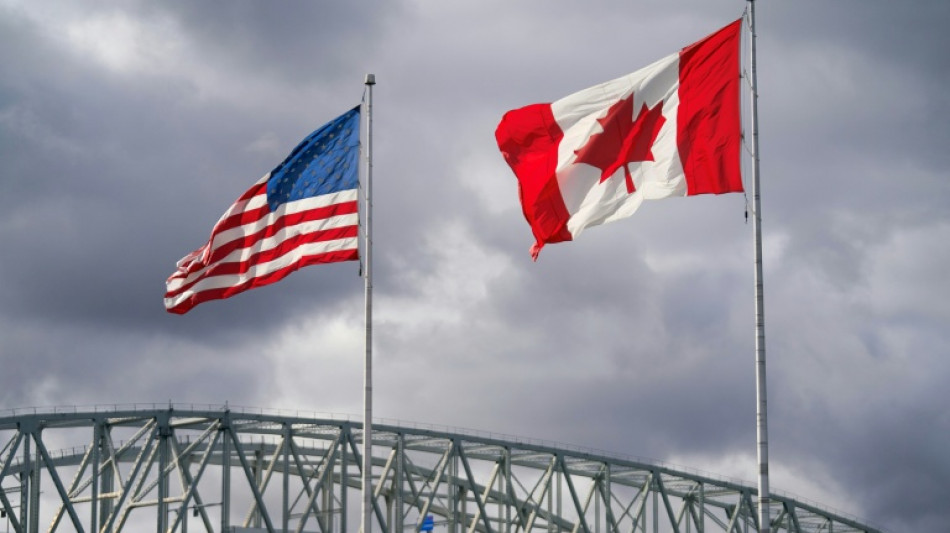
Canada seeks to avert new US tariffs as deadline looms / Photo: Geoff Robins - AFP/File
Fresh US tariffs are due to take effect on a range of Canadian goods after midnight Tuesday, as Ottawa seeks a deal to avert President Donald Trump's planned 50-percent duties.
Trump signed orders for the new wave of tariffs last month, with the White House alleging "discriminatory treatment" by the US neighbor against American alcohol, automobile and dairy products.
The duties are set to take effect Wednesday, covering products such as wine, hockey sticks and cement.
Overall, they target around 5.5 percent of Canada's exports to the United States, worth about $20 billion, Oxford Economics estimates.
While this only poses a "modest" negative risk to Canada's economy, Oxford Economics said in a recent report that the duties would "affect central Canada's manufacturing sector much more severely."
Negotiations between both countries are going down to the wire.
Canadian Prime Minister Mark Carney spoke on the phone with Trump on Monday afternoon, CTV News reported Tuesday.
Carney had said Monday that talks to avert the duties were at an "intense and delicate" stage.
Canadian negotiators have been in Washington to push for a deal to avoid the new tariffs and also secure relief on Trump's sector-specific duties -- which have battered Canada's auto, steel, lumber and aluminum industries.
Ottawa has reportedly offered concessions such as pressuring provinces to put US alcohol and wine back on their shelves, Canadian media reported. But it remains unclear if a deal is imminent.
The US Trade Representative's office did not respond to queries on the matter.
- Political concerns -
"It's not unusual for a trade negotiation to go right up to the deadline," former US commerce official Christopher Padilla told AFP.
He said he expects that the Trump administration threatened new tariffs to try and win early concessions from Canada as the countries negotiate over renewing the US-Mexico-Canada free trade agreement (USMCA).
But even if officials reached a pact that was acceptable to both sides on the trade front, this might be rejected by Trump, who could seek to penalize Canada over other political concerns, he said.
"The relationship with Canada has been challenging from the beginning," he said.
Padilla warned that Trump also has "a history of lashing out against allies when he is frustrated on other fronts," such as when he is not getting what he wants from parties like Iran, China or Russia.
Oxford Economics anticipates that manufacturers who stand to be most impacted include those in the cement, paper, printing, wood, clothing and electronics equipment sectors.
With the US Supreme Court striking down many of Trump's global tariffs earlier this year, the president tapped an untested legal provision for the new duties targeting Canada.
These duties will not apply to energy, potash or goods already facing sector-specific tariffs, but they are set to hit products covered by the USMCA.
Trump's trade envoy Jamieson Greer said the tariffs aimed to "hold Canada accountable" for its retaliation.
Provinces have taken US alcohol products off their shelves, he said, and "given better market access to dairy products from the European Union" among other actions, Greer said in July.
X.Mahi--HStB