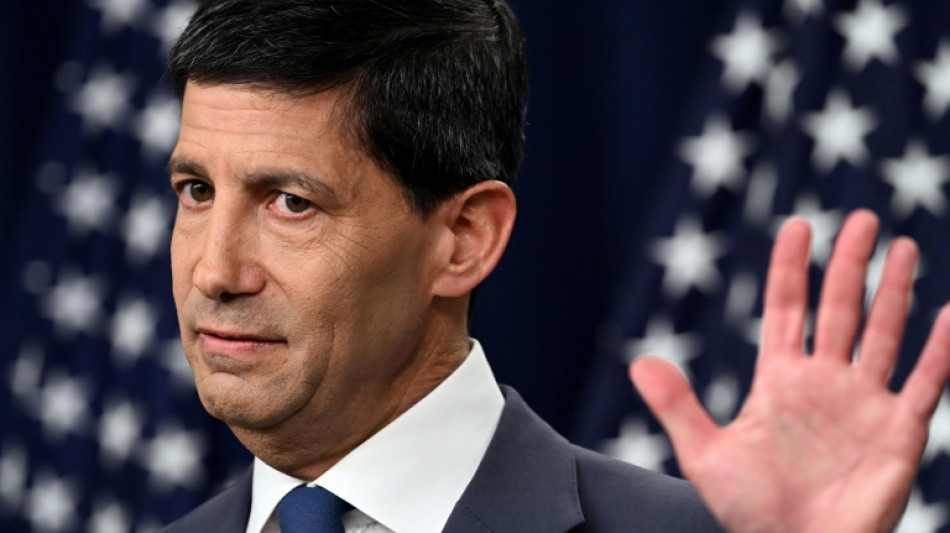
Many US Fed policymakers back interest rate hikes if inflation stays high / Photo: Brendan SMIALOWSKI - AFP
Many US Federal Reserve policymakers believe that interest rate hikes will be necessary if inflation does not decline, minutes of their July meeting showed on Wednesday, firming up expectations of monetary policy tightening on the horizon.
Three of the 12 voting members of the Federal Open Market Committee (FOMC) dissented from the majority decision to hold rates steady last month, calling for an immediate 25-basis-point hike.
Minutes of the meeting, released after a routine three-week lag, showed that "many" of their peers "assessed that policy tightening would likely be necessary if inflation did not decline."
The Federal Reserve has missed its long-term two-percent inflation target for more than five years, and US households have been battered by high prices, even as businesses have largely weathered the storm.
The Fed had begun to ease interest rates from their pandemic peak, but paused the rate-cutting cycle in January, as the effects of US President Donald Trump's turbulent tariff and other policies rippled through the world's largest economy.
Trump has angrily demanded lower interest rates and attacked the Fed's independence, targeting its last chairman with a criminal probe and attempting to unseat another Fed governor.
- 'Family fight' -
Kevin Warsh, Trump's pick to lead the central bank, took over in May and has called for more lively debate and a "family fight" at rate-setting meetings.
The minutes of the July meeting show that he may have got what he wanted, with a wide variety of sometimes contradictory views recorded.
At the meeting, regional Fed presidents Beth Hammack, Lorie Logan and Neel Kashkari all favored raising interest rates immediately.
"These participants remarked that price pressures appeared broad based and judged that the Committee should adopt a more restrictive policy stance to meet its commitment to achieving its price-stability and maximum-employment goals on a sustained basis," the minutes said.
All three have said since the July meeting that they favored raising rates now in order to forestall the possible need for steeper hikes if the Fed acts later.
Still, the majority of policymakers favored the view that incoming economic data in the period leading to the Fed's September meeting "could provide more clarity, and correspondingly reduce uncertainty, about the inflation outlook."
The latest readings of consumer inflation and the Fed's preferred gauge, the Personal Consumption Expenditures price index, have shown an attenuation, but levels remain well above the two-percent target.
Trump's war on Iran has roiled the global economy since late February, sending energy prices skyrocketing and inflation soaring as supply chains absorb the shock.
The minutes on Wednesday also confirmed earlier US media reports that Warsh had suggested reducing the number of times the rate-setting committee meets from eight to six times a year.
Warsh said that doing so "would allow more information to accumulate between meetings than under current practice and provide policymakers and the staff more time to consider strategic monetary policy issues," the minutes said.
No decisions have yet been made on altering the committee's schedule, but reducing the number of rate decisions it makes per year would be in keeping with Warsh's call for the Fed to have a smaller footprint.
Since taking over, Warsh has axed so-called "forward guidance" on the likely direction of Fed policy and called for the central bank to communicate less on its decision-making process.
Markets have had a mixed reaction to the moves, with long-term US bond yields touching multi-decade highs as investors digest having less data on how the Fed will make monetary policy.
N.Uluwehi--HStB