Philippines Struggles to Protect Humpback Whale Breeding Grounds Amid Climate and Management Threats



The Philippines’ only known humpback whale breeding ground faces significant conservation challenges as existing marine protected areas cover a fraction of the habitat required for the endangered Western North Pacific population. With threats ranging from rising ocean temperatures to inadequate enforcement, experts warn that fragmented protection efforts are insufficient to secure the whales' future.
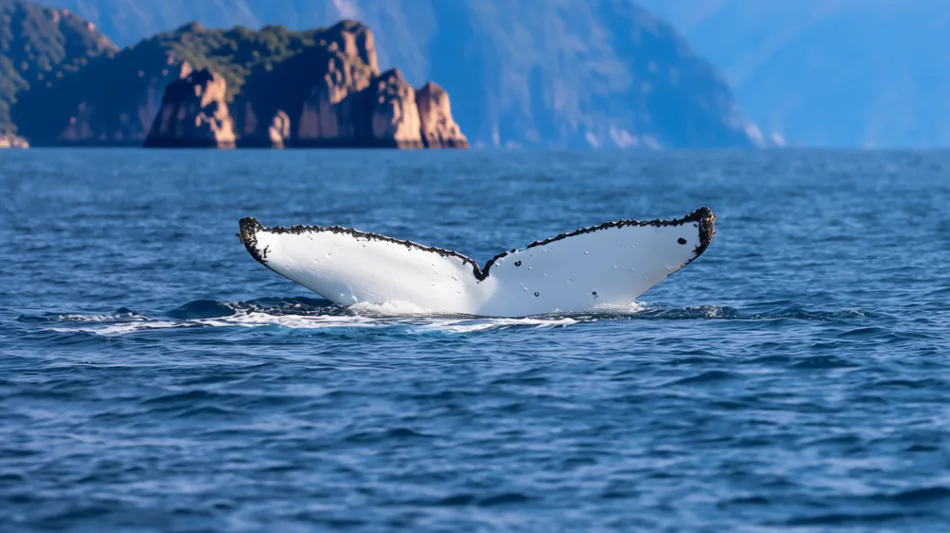
The Babuyan Marine Corridor, located in the northernmost reaches of the Philippines, serves as the nation’s only known breeding ground for humpback whales. This archipelago, situated dozens of kilometers from Luzon, attracts mother-and-calf pairs to its shallow waters during the winter months. However, conservationists and researchers warn that the current framework of marine protected areas (MPAs) offers limited security for this vulnerable population against escalating threats including climate change, boat traffic, and inadequate enforcement.
Mary F Hill, a female humpback whale first identified in 2003, has returned to the corridor for 11 breeding seasons as of April, according to Balyena.org, a cetacean research non-profit. Researchers documented her with a calf in 2016 and again in 2023. Jo Marie Acebes, the organization’s founder and principal investigator, noted that like many humpbacks of the Western North Pacific population, Mary F Hill migrates seasonally between feeding grounds in colder northern waters, such as Russia, and warmer breeding grounds in Japan and the northern Philippines.
While the presence of these whales is well-documented, the physical protection afforded to them remains minimal. Only two marine protected areas exist within the Babuyan Islands archipelago. These MPAs are located along the southern coast of Calayan, one of the main islands, and cover just 1,677 hectares. This figure stands in stark contrast to the nearly 1.7 million-hectare expanse of the Babuyan Marine Corridor.
"Contrasting these figures with the total BMC [Babuyan Marine Corridor] area of nearly 1.7 million hectares gives insight into how little of it is actually protected," Acebes said. She emphasized that while other MPAs exist within the broader corridor, the Babuyan Islands remain a key focus for research and monitoring due to the consistent presence of whales during the breeding season.
The inadequacy of current protections is compounded by enforcement issues. Wilbert Gumarad, Calayan’s municipal environment and natural resources officer, acknowledged that the MPAs have not been properly established or demarcated. "No proper demarcation; no buoys. You cannot see the actual boundaries," he told Dialogue Earth. He highlighted financial constraints as a primary obstacle, noting that funding is required to mark boundaries, hire dedicated sea patrollers, and raise awareness among local communities.
Enforcement is further complicated by the location of designated fish sanctuaries, or no-take zones, within the MPAs. These areas, designated by municipal and national authorities for fish spawning, lie along common boat routes and in front of community landing areas, making them prone to violations. Gumarad noted that while the MPAs have helped regulate fishing and serve as spawning grounds for fish, they have not addressed the broader threats facing the area.
The status of the humpback whales visiting these waters is precarious. While humpbacks are listed as a species of least concern globally by the International Union for Conservation of Nature (IUCN), those in the Western North Pacific Distinct Population Segment are classified as endangered under U.S. law and vulnerable under the Philippines’ national red list for threatened species. As of 2016, estimates placed this population at approximately 1,000 whales.
Acebes, who has worked on cetacean conservation in the corridor for over two decades, outlined a shifting landscape of threats. Before the 2010s, dynamite fishing and high boat traffic were primary concerns. While dynamite fishing has disappeared, increasing boat traffic remains a significant issue. Additionally, marine debris, particularly discarded fishing gear known as ghost gear, poses ingestion and entanglement risks.
Climate change presents an existential threat to the species' reproductive success. A 2022 study suggests that increasing sea-surface temperatures could disrupt humpback whales, which typically breed in waters between 21-28°C and tend to return to the same breeding grounds. Acebes explained that rising ocean temperatures can trigger starvation among whales by altering the timing of prey availability.
"Climate change alters ocean temperatures faster than a whale can adapt, causing a mismatch between when whales arrive at a site and when food, such as krill and small fish, are available," she said. Without sufficient food, female humpbacks struggle to maintain healthy pregnancies, leading to reproductive failures or compromised health that affects their ability to nurse calves.
The Babuyan Marine Corridor has been designated an Important Marine Mammal Area (IMMA) by the IUCN Marine Mammal Protected Area Task Force. IMMAs are discrete marine habitats identified by scientists as having potential for conservation, but unlike government-designated MPAs, they do not confer legal protection. Erich Hoyt, co-chair of the Task Force, stated that breeding habitats are of core concern and that without protection in these areas, humpbacks will be unable to continue their population recovery from historical whaling.
Hoyt noted that as warming oceans reshape marine ecosystems, IMMAs will need to be reconsidered and reassessed every 10-15 years. He argued that existing MPAs for whales are often too small, restricted to coastlines, and fail to represent the most important areas identified by data and expert assessment.
The Marine Protected Areas Support Network (MSN) Secretariat emphasized that humpback whales depend on the connectivity of their migration routes. "If whales can freely and safely move among these habitats, their population’s resilience and recovery are secured," the Secretariat said. A 2023 study found that conservation and fisheries outcomes improve with more protection and connectivity, noting that networks of connected MPAs can deliver increases in fish stock comparable to single large MPAs after 10 years of full protection.
Such connectivity could benefit local fishing communities like Calayan, which has over 2,600 registered fishers. Data obtained from the Municipal Agriculture Office showed that Calayan produced over 700 tonnes of fish in 2025, enough to feed its entire population for over a year based on national averages.
However, expanding protection faces logistical and political hurdles. Acebes conceded that establishing an MPA large enough to protect humpback whales is "extremely difficult." Because the population is highly migratory, a single-plot MPA would not capture their full range. While designating the entire Babuyan Marine Corridor as an MPA would be ideal, a more realistic approach involves starting with key sites such as shallow calving bays.
Balyena.org has been discussing the possibility of establishing MPAs around Camiguin Island, another major island in the archipelago where whales have been observed. Additionally, several barangays in Calayan and Camiguin have declared their own sanctuaries, though these areas have yet to receive accreditation from national authorities.
"We’re hoping [that] in the coming years, we’ll be able to focus on these communities who are willing to establish MPAs in their areas, and guide them through the entire process," Acebes said. "Start small… and eventually come up with a bigger area that is focusing mainly on humpbacks."
Calayan municipal mayor Joseph Llopis emphasized the role of local communities in managing these areas. While technical guidance would come from the national government, he noted that "the operation and safeguarding… should be the community’s responsibility."
The MSN Secretariat called for a regional and transboundary approach to ensure protected areas are effectively managed and connected. Hoyt encouraged communities to use IMMA information as a basis for advocating stronger conservation measures. "When you protect [whales’] habitat in any form, like [via] marine protected areas, then you protect everything else within it," Acebes said.
Despite the designation of the corridor as an IMMA and the presence of small MPAs, the lack of data collection within these zones makes it difficult to determine if they overlap with the areas humpback whales typically use. Acebes stressed that whales require large areas even when breeding, and protection must be in the right place, of the right size, and managed effectively to be successful.
J.Mana--HStB