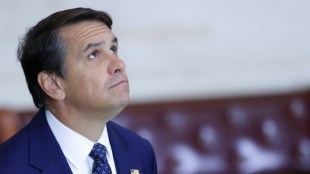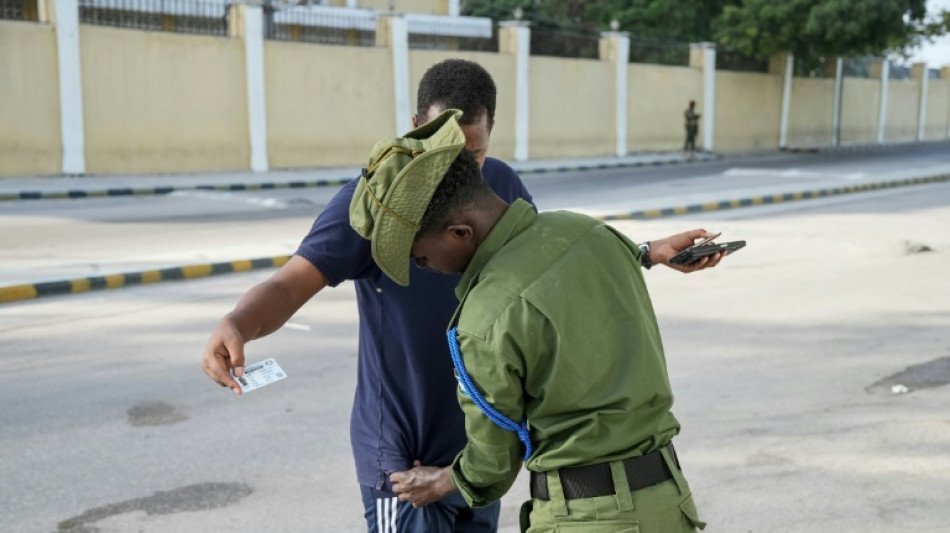
Mogadishu votes in first local elections in decades under tight security / Photo: Hassan Ali ELMI - AFP
Somalians turned out in droves on Thursday to vote in local elections in the capital Mogadishu -- the first by universal suffrage in nearly 60 years -- with the city locked down amid security concerns.
The east African country is struggling to emerge from decades of conflict and chaos, battling a bloody Islamist insurgency and frequent natural disasters.
Long lines snaked outside seven polling stations that an AFP correspondent in the capital visited early on Thursday, with those waiting impatient and excited to cast their ballots.
"This is a great day," Guhad Ali, 37, said, proudly showing his ink-stained finger, proof that he had voted.
"I am so proud that I don't even feel that I'm queuing," said 29-year-old mother of two Shamso Ahmed, who spent hours waiting to cast a ballot for the first time in her life.
Thursday's polls will serve as a test of the direct voting system championed by President Hassan Sheikh Mohamud, amid opposition from the country's states who say it is a bid to centralise power in Mogadishu.
"This is the future of the Somali people," he said after voting, urging every citizen to "take the path of democracy".
The volatile nation has stepped up security ahead of the polls, with more than 10,000 security personnel deployed across the capital.
"This is history today, it is a day the Somali people have gotten a new door opened, so that we call on the more than 500,000 people, who have taken the voting cards to come out and cast their votes," electoral commission chief Abdikarim Ahmed Hassan said while visiting a polling station in the south of the capital.
Mogadishu police chief Moalim Mahdi told reporters that "we are committed to ensuring the safety and security of the people" and urged "patience for each other as you cast your vote".
According to the country's electoral body more than 1,600 candidates will contest 390 local council seats in the southeastern Banadir region that takes in the capital.
Key opposition parties have boycotted the election, accusing the federal government of "unilateral election processes".
- Clan-based system -
Somalia's system of direct voting was abolished after Siad Barre took power in 1969. Since the fall of his authoritarian government in 1991, the country's political system has revolved around a clan-based structure.
Universal suffrage is, however, practised in the breakaway region of Somaliland, which declared independence in 1991 but has never been internationally recognised.
In May 2023, the semi-autonomous northern state of Puntland held local elections by direct vote, but later abandoned the system for local and regional polls in January.
Thursday's vote has been postponed three times this year.
Somalia has been battling Islamist Al-Shabaab militants since the mid-2000s, but security has deteriorated sharply this year, with the group retaking dozens of towns and villages and reversing most gains from the 2022–2023 military campaign.
The electoral body boss Abdikarin Ahmed Hassan on Sunday said all movement would be restricted on election day and "the whole country will be shut down".
On Monday, the civil aviation authority announced that the country's main airport would be closed on voting day.
- 'Stage-managed' -
The election is seen as a test ahead of a presidential ballot due in 2026, when President Hassan Sheikh Mohamud's term comes to an end.
While the vote marks a pivotal moment for Somalia, security analyst Samira Gaid expressed scepticism, saying the process was "stage-managed" to make the Horn of Africa nation "appear like a democracy".
"There is close to zero civilian participation. It's mostly a government and security forces operation," Gaid told AFP, adding that the voter registration exercise had not been successful.
The political strain is fuelling tensions ahead of next year's national elections, with parliament's mandate expiring in April and the president's term ending in May.
The International Crisis Group has warned that the situation resembles the 2021 political crisis that erupted under former president Mohamed Abdullahi "Farmajo". That led to clashes between clan-based factions after he failed to organise parliamentary and presidential elections before his mandate expired.
With the clock ticking, there is still no consensus on how the 2026 election will be conducted, and the opposition and federal member states are threatening to run a parallel process if no agreement is reached.
E.Kaleo--HStB