Trump mulls ground troops: latest developments in US-Iran war / Photo: IBRAHIM AMRO - AFP
President Donald Trump on Monday refused to rule out sending ground troops into Iran, as he warned that the spreading Middle East war unleashed by US-Israeli strikes could last more than a month.
As the war raged through a third day, Israel traded fire with Iran-backed group Hezbollah in Lebanon, and Iranian counterattacks hit Gulf states and a British base in Cyprus. International gas prices rose and stocks fell.
Here are the latest developments:
- US mulls ground forces -
Trump said he would not rule out sending ground troops into Iran.
"I don't have the yips with respect to boots on the ground -- like every president says, 'There will be no boots on the ground.' I don't say it," he told the New York Post.
"I say 'probably don't need them,' [or] 'if they were necessary,'" he said.
Trump later said at the White House he had taken the "last, best chance" to stop Iran's alleged nuclear bomb programme and "eliminate the intolerable threats posed by this sick and sinister regime".
- Revolutionary Guards issue threat -
Iran's Revolutionary Guards warned the United States will "no longer be safe".
"The enemy should know that their happy days are over and they will no longer be safe anywhere in the world, not even in their own homes," the Guards' Quds force, which oversees its foreign operations, said in a statement carried by state TV.
- Nuclear site allegations -
Iran said Israel and the United States had attacked its nuclear facility at Natanz, one of the main targets of the previous conflict between the three countries last June.
The UN nuclear agency's head had earlier said there was "no indication" any nuclear installations had been hit.
- Trump cites four objectives -
Trump said the US attack was meeting its goals ahead of schedule, but also warned the war could go "far longer" than his initial estimates of about a month.
"Our objectives are clear," he told an event at the White House.
"First, we're destroying Iran's missile capabilities... Second, we're annihilating their navy... Third, we're ensuring that the world's number-one sponsor of terror can never obtain a nuclear weapon.
"Finally we are ensuring the Iranian regime can't continue to arm, fund and direct terrorist armies outside of their borders."
- Israel strikes Tehran -
The Israeli military said it had begun a new "broad strike" in the "heart of Tehran".
Loud explosions were heard in several parts of the Iranian capital, AFP journalists said.
Iran's president appointed Revolutionary Guards general Majid Ebnelreza as acting defence minister after his predecessor was killed in Israeli-US strikes.
- Drone hits Cyprus base -
At least one drone crashed into Britain's RAF Akrotiri military base in Cyprus in the early hours of Monday and another two were intercepted, prompting an evacuation of the facility.
While Greece said it was sending two frigates and two F-16 jets to Cyprus, the island's government said it would seek guarantees that British bases there would not be used for anything other than humanitarian purposes.
- UK-US spat -
Britain had agreed on Sunday to allow the United States to use British military bases to fire "defensive" strikes at Iranian missile systems after initially refusing -- but this was not enough for Trump, who took aim at British Prime Minister Keir Starmer in a newspaper interview.
Trump told the Daily Telegraph he was "very disappointed" with the initial refusal.
Starmer told parliament he "stands by" the decision not to take part in the initial strikes, and that British bases in Cyprus would not be used by the United States in the war.
- Gulf states targeted -
Iran hit targets across the Gulf, with the army saying it had launched 15 cruise missiles on a US air base in Kuwait and vessels in the Indian Ocean.
QatarEnergy halted liquefied natural gas production after a processing base and a power plant in Qatar were hit, one person was killed as an oil tanker was targeted off Oman. British officials said a vessel in a Bahrain port had been struck by "unknown projectiles".
A drone struck a fuel tank terminal in the Emirati capital Abu Dhabi, causing a fire, though operations were not impacted, authorities said.
The US embassy in Kuwait, where black smoke could be seen, said in a statement that people should not come to the mission and "take cover" in their residence.
- Red Cross warns of 'large-scale conflict' -
The war is putting civilians in "grave danger", warned the head of the International Committee of the Red Cross, Mirjana Spoljaric.
"The scale of major military operations flaring across the Middle East risks embroiling the region -- and beyond -- into another large-scale armed conflict that will overwhelm any humanitarian response," she said.
The European Union is expected to discuss potentially activating a mutual assistance clause after the Iranian drone strike in EU member Cyprus, a spokeswoman said.
- China urges truce -
China's foreign ministry called for a ceasefire and diplomatic talks to end the conflict, as officials in Beijing confirmed one citizen had been killed in Iran.
State media reported Foreign Minister Wang Yi told his Iranian counterpart Beijing "supports Iran defending sovereignty", and told his Omani counterpart that China was "willing to play a constructive role" towards stopping the fighting.
Turkish President Recep Tayyip Erdogan, a key regional player, called for "an end to the bloodbath".
- Dubai to resume 'limited' flights -
Dubai Airports said "limited" flights would resume on Monday evening, three days after flights were first cancelled over the war.
A "small number" of tennis players remain stuck in Dubai following a men's tournament last week, including men’s title-winner Daniil Medvedev of Russia, said the tour's governing body, the ATP.
Germany said it would send planes to Saudi Arabia and Oman as part of efforts to evacuate thousands of tourists stranded by the war.
- Hezbollah fighting -
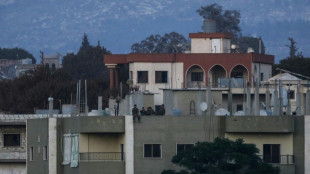
Israeli attacks on the Lebanese militant group Hezbollah, which is backed by Iran, sent thousands of people fleeing in southern Lebanon.
UN Secretary-General Antonio Guterres called for "utmost restraint".
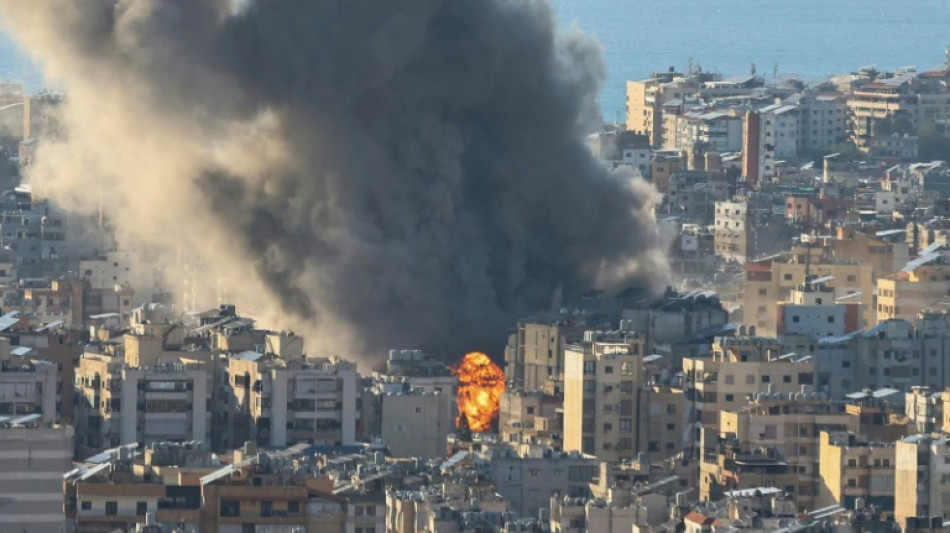
Several strikes hit Beirut's southern suburbs after Israeli evacuation warnings. The Palestinian Islamic Jihad's armed wing said its commander in Lebanon was killed in the strikes.
The Israeli strikes killed 52 people and forced more than 28,500 from their homes, according to the Lebanese government.
It imposed an "immediate ban" on Hezbollah's military and security activities and called for it to hand over its weapons.
- Iran retaliates -
Iran's Revolutionary Guards said they had struck an allegedly US-linked oil tanker, the ATHE NOVA, in the Strait of Hormuz as part of a wave of retaliatory strikes.
They also issued statements describing waves of missile and drone attacks on 500 targets, including Israeli Prime Minister Benjamin Netanyahu's office and security sites in Tel Aviv, Haifa and east Jerusalem.
Iran insisted its attacks were directed only at US and Israeli targets. Foreign Minister Abbas Araghchi said the country "harbours no hostility towards the Persian Gulf countries".
- Gas price surge -
European gas prices soared more than 50 percent on fears the conflict would cut supplies in the Gulf region, after Qatar halted liquefied natural gas production.
Global stocks retreated, with Wall Street's main indices falling more than one percent before trimming their losses.
- Iranian deaths -
The Iranian Red Crescent said that "131 cities have been affected" by US-Israeli strikes "and, regrettably, 555 of our compatriots have been killed". Iranian officials confirmed the killings of three Guards members and five army personnel.
burs-jhb/yad
Z.Aina--HStB