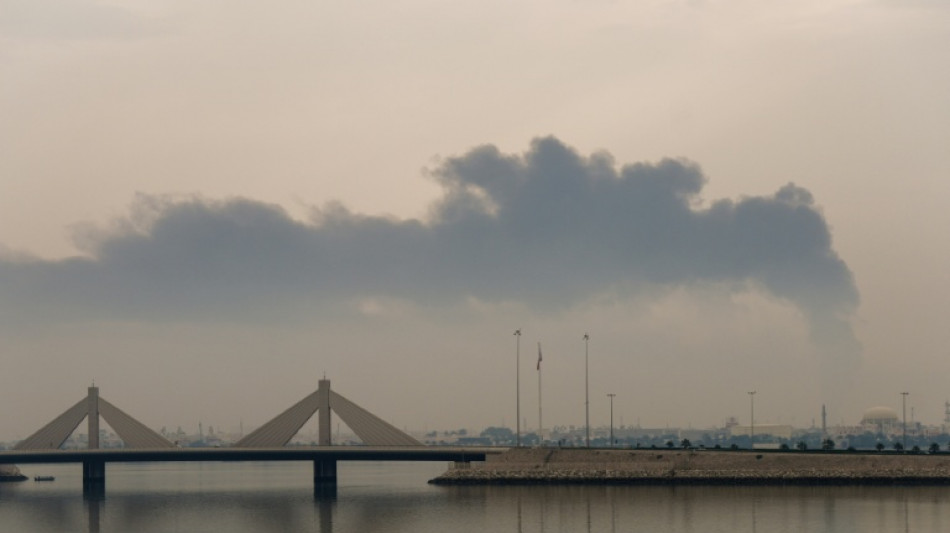
Bahrain cracks down on Shia dissent as Iran war tests kingdom / Photo: Fadhel MADHAN - AFP
While Bahrain comes under Iranian fire, some in the country have expressed sympathy with Tehran and even rejoiced over hits on US bases, prompting a crackdown mainly targeting the Shia Muslim community, activists told AFP.
The crackdown risks reopening old woundsin Sunni-ruled Bahrain which is home, like neighbouring Iran, to a large Shia community that has long complained of marginalisation.
The killing ofAyatollah Ali Khamenei, Iran's supreme leader and a spiritual guide for many Shia Muslims sparked anger in Bahrain, where some condemned the United States on social media and in small protests, while others cheered Iranian attacks on US bases and called for troops to leave.
In response, since the start of the war on February 28, authorities have arrested more than 200 people most of them Shia, the Britain-based Bahrain Institute for Rights and Democracy (BIRD) and the Al Amal Center for Human Rights and Justice told AFP.
"There is widespread resentment, fear and terror in Bahrain, especially among Shias, who now feel targeted," said Naji Fateel, a Bahraini human rights defender whose own son was arrested this month.
"These arbitrary measures are all directed at one sect only," added Fateel, who himself spent years behind bars.
- 'Fear and terror' -
Fateel's son Hussein and another man were arrested after filming themselves marching towards the US embassy in Bahrain's capital Manama, carrying a photo of Khamenei to protest his killing.
Fateel said his son was accused of collaborating with the enemy and treason, among other charges.
Some of those arrested were accused of espionage, while others are being held for protesting.
Other charges include treason, spreading footage of attacks or sympathising and glorifying Iran's campaign.
One man was arrested after he shared a drawing representing Khamenei, two activists told AFP.
Anger at the United States over its support of Israel in Gaza and fury over Khamenei's killing "explains why Bahrain was the only Gulf country where people were so delighted to see American bases hit", according to activist Sayed Ahmed AlWadaei of BIRD.
This sentiment contrasts starkly with the official line, with the government normalising ties with Israel and hosting the United States' Fifth Fleet.
- Treason -
Asked about the arrests, a government spokesperson said "all persons are subject to equal treatment, without regard to personal characteristics, gender, or religious background. Any suggestion to the contrary is categorically false".
"All those charged are entitled to a fair trial and afforded due process," the spokesperson added.
But Bahraini rights activists tell a different story.
Two activists told AFP that lawyers had a difficult time reaching their clients. In the case of one woman arrested over her social media posts, her family spent five days trying to locate her, according to a relative.
On Friday, BIRD called for Bahraini authorities to investigate the death in custody of Shia activist Mohamed Almosawi, 32, who had been arrested a few days prior and whose funeral drew large crowds.
The arrests also come at a time when Gulf countries are concerned about Iranian penetration as they come under attack, with Qatar, Kuwait and the UAE all cracking down on what they call Iran-related networks.
For Kristin Diwan of the Arab Gulf States Institute, Bahrain's longstanding marginalisation of Shia Muslims has created "an environment that Iran has exploited in the past and can do so again".
- 'Ugly sectarianism' -
Iran has justified its attacks on its neighbours by saying it is targeting US military bases, though civilian infrastructure has also been hit.
Israel and the United States "both started this war and dragged the countries of the region into this", Hussain, a 31-year-old Shia Bahraini told AFP.
Both the war and the government's crackdown threaten to reignite old grievances.
Protests demanding an elected government rocked the archipelago in 2011, at the height of the Arab Spring uprising sweeping through the region.
The protests in Bahrain sparked a major crackdown on dissent, with Manama blaming the uprising on Iran and accusing it of trying to overthrow the government.
Iran at the time denied any involvement in the movement.
While broader unrest is unlikely this time, Diwan said the war "may reignite some of the ugly sectarianism" seen previously in Bahrain.
Fateel said pro-government Bahrainis were going after Shia activists online, warning a sectarian backlash was already underway.
"I have received threats from online trolls... I could be arrested at any moment simply for expressing my opinion," he said.
G.Lanakila--HStB