Oobah Butler’s HBO Series Exposes Grifters in Wellness, Wine, and Tech
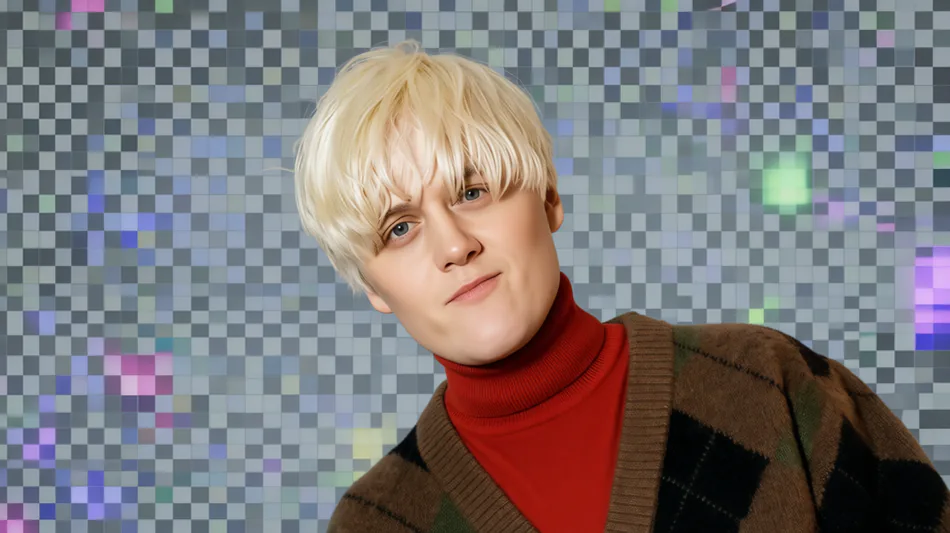
Stunt journalist Oobah Butler returns with a new HBO series that targets the opulent and often gullible worlds of wellness, wine, dating, and technology. By executing elaborate scams involving fake products and fabricated personas, Butler aims to lampoon the systems that allow bad actors to thrive, drawing comparisons to his past viral stunts while highlighting his move to New York.
Oobah Butler, the British documentarian known for viral stunts ranging from creating a fake restaurant to selling Amazon drivers’ urine, has launched a new HBO series titled "Oobah: Scams for a Better Tomorrow." The five-episode premiere, which began airing on November 22, follows Butler as he infiltrates the wellness, wine, dating, and music industries to expose their regulatory gaps and susceptibility to manipulation.
Butler’s approach relies on identifying existing bad actors and replicating their methods. Speaking from a coffee shop at the New York Historical Society in Manhattan, where he was recognized by a patron while ordering a latte with four espresso shots, Butler described his methodology as "monkey see, monkey do." He stated that he simply finds these bad actors and copies them.
The series premiere focuses on the wellness industry, an area Butler describes as a "gold rush of bullshit." In this episode, he attempts to launch a company selling human tears as a skin serum. To lend credibility to the venture, he sought advice from Patrick O’Neill, the former chief creative officer of Theranos. Despite the scandal surrounding O’Neill’s previous employer, he engaged earnestly with Butler’s proposal, offering packaging advice for a tear-shaped bottle and discussing the name "Lacrimé," noting that it made the product feel exotic compared to mainstream brands like Johnson & Johnson.
Butler also consulted Jennifer Keller, a lawyer charging $1,500 an hour, regarding potential fraud in his wellness venture. When Butler confessed he wanted to enter the industry despite knowing he might have committed fraud, Keller laughed and remarked that he sounded "more and more like an American." The segment highlights the poorly regulated nature of the skincare and supplement markets.
In another episode, Butler targets the fine wine industry by attempting to sell Fumare, a brand of smoke-tainted wine that is typically discarded or used for barbecue sauces. He aimed to convince New York Times wine critic Eric Asimov to provide a positive review. Butler conducted a psychological profile of Asimov, determining he was a "contrarian" who appreciated romance and was a fan of Bob Dylan. During the tasting, Butler played a Dylan song on the piano and pretended the smoky wine was a Barolo, a variety Asimov had previously praised. Asimov responded with "I have no complaints," an endorsement Butler immediately attached to the product’s label.
Butler also infiltrated the dating industry by launching an AI company called Sole. While purporting to use artificial intelligence for matchmaking, the service actually connected users with other humans to see if they would connect naturally. Butler noted that the premise was based on the idea that people trust technology more than direct conversation.
The series reflects Butler’s broader critique of Big Tech, which he describes as "riddled with inauthenticity." He argues that the sector is built on speculative promises and utopian ideals rather than reality, with CEOs lying about future capabilities to inflate stock prices. Despite HBO’s backing, Butler emphasized that the show retains a DIY aesthetic, often involving just him and a small crew. He noted that one episode was essentially filmed in his bedroom and that he had been working on the finale for six years, originally envisioning it as a feature film.
Butler’s move to New York in February 2024 followed a long-standing desire to live in the city, which he first visited in 2016. He cited Robert Caro’s biography of urban planner Robert Moses, "The Power Broker," as influential in helping him understand how power operates in New York. He contrasted the city with his upbringing in Feckenham, a small village in the UK, where he grew up in a lower-class family and developed a sensitivity to class distinctions.
Butler observed that while upper-class individuals in the UK carry themselves with a certain authority, those same individuals lose that status in America. "I see them come here and no one gives a shit," he said. He credited his previous work on MTV’s "Catfish UK" with enabling his move to New York, stating it was the right thing to do financially.
Before his career in stunt journalism, Butler started a band called My Grey Horse in 2010 and began writing music reviews at age 17, initially hoping to generate coverage for his band. He later joined VICE as a freelance video host, producing documentaries including the viral piece on The Shed restaurant. He also co-hosted "Catfish UK" and produced films for Channel 4.
Butler’s interest in deception runs in his family; he noted that his great-grandfather sold rabbit droppings rolled in flour as medicine in the late 19th century. "I'm cut from a line of people who sell shit," Butler said.
The series concludes with a finale that Butler has been developing for six years, though he declined to reveal details. The show aims to expose the vulnerabilities of cultural institutions and wealthy industries through satire, positioning itself as a critique of systems that allow grifters to succeed.
T.Hokulani--HStB