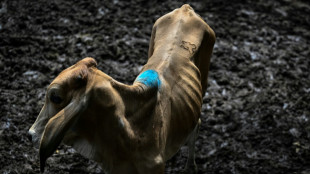
UN chief urges nations to end 'war on nature' / Photo: KAREN MINASYAN - AFP



UN chief Antonio Guterres said Thursday that the "war on nature has not yet ended" as he launched a report showing the world was falling short of its biodiversity committments.
Nations will assess progress and pitfalls toward a 2030 goal to stop the destruction of nature when they meet in Armenia next week for the UN biodiversity negotiations.
Nearly 200 countries joined the landmark "Paris Agreement for Nature" four years ago but have been slow to act on its objectives.
The pact laid out 23 targets for halting and reversing nature loss by 2030, including reducing pollution, protecting threatened species and conserving 30 percent of the world's land and oceans.
But many of these targets are off track, said Guterres as he launched a global report spotlighting the gaps between ambition and action.
"It's not all bad news... There is progress, but not enough. We are far from what is necessary," he told reporters in the Armenian capital Yerevan where the COP17 talks start on Monday.
"The report shows that many of the critical elements of progress... are still missing in action".
This meant the "war on nature has not yet ended", he added.
The report showed that government policies were insufficient to meet the centrepiece biodiversity goal to protect 30 percent of Earth's land and waters by 2030.
Other targets were lagging further behind. Guterres said countries must honour their financial pledges to developing countries and spoke to a lack of headway in tackling government spending that harms nature.
Countries have vowed to reduce harmful subsidies by $500 billion a year by 2030 -- state incentives for industries like fossil fuel production, mining and agriculture -- but little progress has been made.
For every dollar invested in protecting or restoring nature, about $30 still goes into activities that degrade it, according to UN figures.
"Nature won't thrive on good intentions," Guterres said.
He pointed to the "very strong influence" of some sectors that had "too much power" over government including industrial fishing, fossil fuels and logging operations.
The lack of finance has been identified as a particular barrier to achieving the biodiversity goals.
Governments are not expected to make major new pledges at COP17 but will be under pressure to correct course.
"Biodiversity is in crisis. Species are disappearing and ecosystems are collapsing," said Sue Lieberman from the Wildlife Conservation Society.
"Governments and all stakeholders must see that investing in nature is not a luxury, it is the very key to our survival."
S.Kamakana--HStB